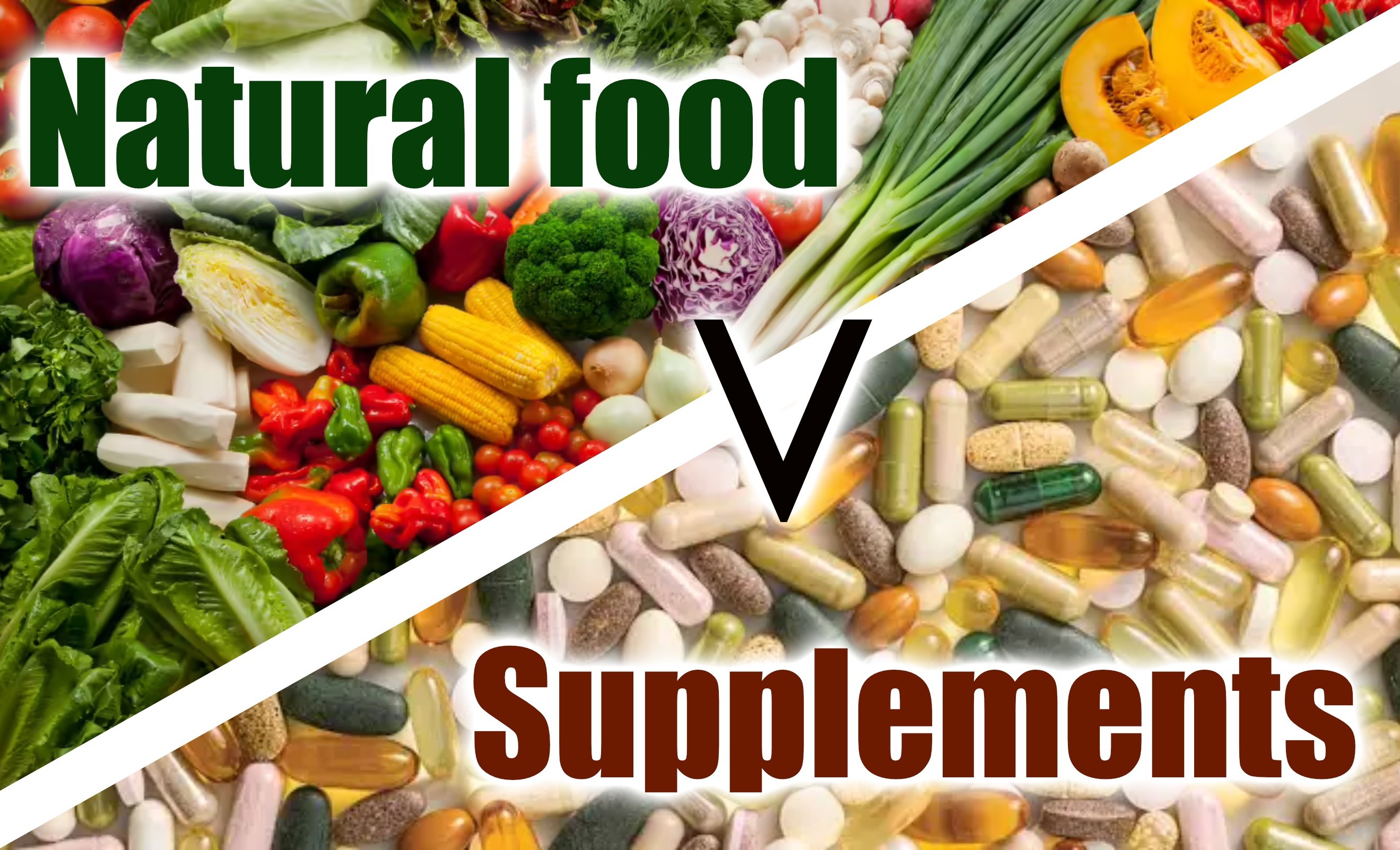
Natural food versus Dietary Supplements
Study claims lower risk of death and cancer from natural food nutrients versus supplements
A study from Tufts University in the United States found that there is a lower risk of death and cancer from nutrients found in natural foods as opposed to supplements.
The Tufts University article states:
Adequate intake of certain nutrients is associated with a reduction in all-cause mortality when the nutrient source is
foods, but not supplements. There was no association between dietary supplement use and a lower risk of death.
In addition, excess calcium intake was linked to an increased risk of cancer death, which the researchers found was associated with supplemental
doses of calcium exceeding 1,000 mg/day. The study was published on April 9 in Annals of Internal Medicine.
“As potential benefits and harms of supplement use continue to be studied, some studies have found associations between excess nutrient intake and
adverse outcomes, including increased risk of certain cancers,” said Fang Fang Zhang, M.D., Ph.D., associate professor
at the Friedman School of Nutrition Science and Policy at Tufts University and senior and corresponding author on the study. “It is important to understand the role that the
nutrient and its source might play in health outcomes, particularly if the effect might not be beneficial.”
“It is important to understand the role that the nutrient and its source might play in health outcomes, particularly if the effect might not be beneficial.”
Read more on this at the Tufts website
In the wake of the study published in Circulation journal, related to
Omega3 Supplements, and many other research studies, that are mainly done to promote supplements
and added vitamins in foods; Dr. Marion Nestle, professor of nutrition at New York University, summed
it up best in an August 2013 blog post titled, FDA study: Do added nutrients sell products? (Of course they do).
“Food marketers know perfectly well that nutrients sell food products. The whole point of doing so is to be able to make nutrient-content claims on package
labels… Plenty of research demonstrates that nutrients sell food products. Any health or health-like claim on a food product – vitamins added, no trans fats, organic – makes people
believe that the product has fewer calories and is a health food… As I keep saying, added vitamins are about marketing, not health.”
The advice of the honest scientific community to date is to remain focused on Intelligent Eating of natural foods as part of an individually suitable Balanced Diet and living a correct life style for vigorous health.
“Food marketers know perfectly well that nutrients sell food products. The whole point of doing so is to be able to make nutrient-content claims on package labels… Plenty of
research demonstrates that nutrients sell food products. Any health or health-like claim on a food product – vitamins added, no trans fats, organic – makes people believe that
the product has fewer calories and is a health food… As I keep saying, added vitamins are about marketing, not health.”

Good healthy foods
Are supplements medicines of foods?
Supplements are considered food products, not medicine or drugs, by most regulatory agencies. They are intended to supplement the diet, not to treat, cure, or prevent diseases. Unlike drugs, they do not require pre-market approval for safety or efficacy, and are instead categorized under food, dietary, and nutritional guidelines.
Key Distinctions:
- Regulation: In the U.S. and many other countries, the FDA treats supplements as a subcategory of food. In the EU, they are regulated under food law.
- Purpose: They bridge nutritional gaps, enhance wellness, and provide concentrated nutrients (vitamins, herbs, amino acids).
- Safety: Supplements should not be used as medicine as they can interact with, or reduce the effectiveness of, actual medications (e.g., Vitamin K with blood thinners).
- Safety Testing: Manufacturers are responsible for safety, but pre-market approval for effectiveness is not required.
It is highly recommended to consult a medical doctor before starting supplements, particularly if you have existing health conditions or are taking medication.
Should we consider taking dietary supplements?
Most people with a balanced diet do not need dietary supplements, as nutrient-dense foods are the best source. Supplements should generally only be taken to address specific deficiencies or for, such as, pregnancy (folic acid), veganism (B12), or insufficient sunlight (Vitamin D). Consult a doctor to avoid harmful excess doses.
Key Considerations for Supplement Use:
When They Are Useful: Specific populations (pregnant women, elderly, vegans) or people with documented deficiencies (e.g. iron) may benefit.
Potential Risks: Megadosing can be harmful; for example, high-dose Vitamin E is linked to increased risk of hemorrhagic stroke.
Vitamin D: It is often recommended to take 10mcg of Vitamin D during autumn and winter months, notes the NHS.
Diet First: Supplements cannot replace a nutrient-dense, varied diet.
Consult a Doctor: Before taking any supplement, ask your doctor to review them, especially for potentially dangerous interactions with prescription medications.
Are high doses/intake of supplements harmful?
High intakes of supplements can be harmful, often causing toxicity, organ damage, or severe side effects. While vitamins and minerals are essential for health, taking excessive doses — particularly fat-soluble vitamins (A, D, E, K) and certain minerals—can lead to serious health complications, as these compounds can accumulate in the body.
Key Risks of High-Dose Supplementation
- Toxicity and Overdose: Fat-soluble vitamins (A, D, E, K) are stored in the liver and fatty tissues, meaning they can build up to toxic levels. Symptoms of overdose can include severe nausea, vomiting, dizziness, headache, and in extreme cases, coma or death.
- Organ Damage: High doses of vitamin A (retinol) are linked to liver damage and decreased bone strength. Excessive Vitamin D can cause kidney failure.
- Nerve Damage: High levels of Vitamin B6 (over 100mg a day) are known to cause peripheral neuropathy, leading to tingling, numbness, and burning in the hands and feet.
- Increased Disease Risk: Contrary to popular belief, high-dose antioxidants (like Vitamin E) may not prevent, and might potentially increase, risks of some cancers and heart disease. High intake of beta-carotene has been linked to increased lung cancer risk in smokers.
- Interference with Medication: Supplements can interact negatively with prescription drugs, such as Vitamin K reducing the effectiveness of blood thinners like warfarin.
- Masking Deficiencies: Large intakes of folic acid can hide Vitamin B12 deficiencies, which, if left untreated, can lead to permanent nerve damage.
Supplements Most Likely to Cause Harm
- Vitamin A (Retinol): Can lead to liver injury and, in pregnant women, birth defects.
- Vitamin D: Excess causes high calcium levels (hypercalcemia), resulting in kidney stones and, rarely, kidney failure.
- Iron: Toxicity can occur at just 5 times the recommended daily intake (RDI), causing gastrointestinal distress and, in severe cases, death.
- Zinc: High doses (over 100mg/day) can lead to copper deficiency and immune system suppression.
- Selenium: Excessive amounts can lead to hair loss, fatigue, and nerve damage.
Recommendations for Safety
- Don't “Megadose”: Avoid taking doses significantly higher than the Recommended Dietary Allowance (RDA) unless specifically prescribed by a healthcare provider.
- Prioritize Diet: Get nutrients from a balanced, varied diet whenever possible, as this is the safest way to meet nutritional needs.
- Consult a Professional: Always speak with a doctor or dietitian before starting new supplements, particularly if you are pregnant, nursing, or on medication.
- Check Labels: Ensure you are not exceeding the “Tolerable Upper Intake Level” (UL) for nutrients, which accounts for intake from both food and supplements.
- Be Wary of “Natural”: “Natural” does not mean safe; herbs and botanical supplements can cause significant harm and liver toxicity.
Read more here: EWG: How Much Is Too Much?
Therefore let us go for a referendum vote and decide on:
“Should we remove the natural healthy food from our plates and replace them with supplements.”
(Although most of the natural food from our plates have already been taken away, and replaced by the junk food/fluids and supplements without our consent).
While voting on referendum let us keep in mind the following:
Scientific research studies are the main source of understanding facts and improving knowledge. But then health fraud scammers, the modern equivilent of the
ancient Snake oil sellers and quacks, have besieged Medical science and tried to reign supreme within the Research studies field.
Read more at: Cartoon Illustration
When it comes to health It is now becoming more and more challenging for an ordinary person to decide what to believe and what not to believe.
No Peer Reviewed, highly alert, watchful journal is immune to publishing research studies which may later be found bogus or faulty.
Don't be taken in by the people who claim to sell you ‘wonder cures’ or ‘health in a bottle’.
Supplements can provide some benefit and at time may become essential, but we should follow the advice of honest medical doctors while thankfully reading the honest scientific medical communities/experts suggestion, as explained by Harvard experts here: Fish oil: friend or foe?
Read more on Facts on Supplements and Herbs
Comment:
It seems that every day there appears new research findings on the benefits of taking this supplement and that. Taking supplements, instead of spending time and effort in
obtaining, preparing and eating 'natural' foods, often seems to fit in with modern 'hectic' lifestyles. The food industries and the supplement manufacturers spend vast
amounts of money in research and marketing. Often this kind of research and aggressive marketing can confuse, mislead, or even scam ordinary people into taking supplements
unnecessarily, and often spending a lot of money in the process. Concocted research is done to produce findings to support our modern ‘Death marketing’ and
‘Death Management’ civilization.
Sometimes even Governments deliberately join the ambiance Bogus. In the United States, the 1994 Dietary Supplement Health and Education Act (DSHEA) classifies supplements as a
category of food, not drugs, which means they are not required to be proven safe or effective before they are marketed; in the UK, dietary supplements (food supplements) are
regulated as food, not medicines, under the Food Safety Act 1990, with similar regulations in Scotland, Wales, and Northern Ireland. While manufacturers do not need pre-market
approval for safety or efficacy, they must ensure products are safe, accurately labelled, and use permitted ingredients. However, the UK government encourages supplementation
only for specific nutritional gaps (like Vitamin D) rather than as a general health measure, focusing instead on improving overall diet.
LINKS:
AHA Journals - Circulation: Omega3 Supplements
Harvard Health Publishing: Fish oil: friend or foe?
NH article- What is Correct Information?
NH article- Facts on Supplements and Herbs