

What is the Glycemic Index?
The Glycemic index (GI) is a measure of how quickly a food can make your blood sugar (glucose) rise. Only foods that contain carbohydrates have a GI. Foods such as oils, fats, and meats do not have a GI, though in people with diabetes, they can affect the blood sugar.
When we eat food that contains carbohydrates, our digestive system changes carbohydrates into glucose which is then released into the blood hence (blood sugar or Blood glucose). Glucose is the major source of energy for cells of our Body; however, the cells cannot take energy directly from the glucose, this is achieved through a three stage process called 'cellular respiration'.
What are carbohydrates
What are carbohydrates? Carbohydrates, or carbs, are sugar molecules. Along with proteins and fats, carbohydrates are one of three main nutrients found in foods and drinks. Your body breaks down carbohydrates into glucose. Glucose, or blood sugar, is the main source of energy for your body's cells, tissues, and organs.
The Glycemic Index explained
The Glycemic Index (GI) assigns a numeric score to a food based on how drastically it makes your blood sugar rise. Foods are ranked on a scale of 0 to 100, with pure glucose (sugar) given a value of 100. The lower a food's glycemic index, the slower blood sugar rises after eating that food. In general, the more processed a food is, the higher its GI, and the more fiber or fat in a food, the lower it's GI.
The glycemic index (GI) is a ranking system for carbohydrate-containing foods, measuring how quickly they raise blood glucose levels on a scale from 0 to 100. Low-GI foods (55 or less) cause a slow, steady rise in blood sugar, while high-GI foods (70 or above) cause rapid, sharp spikes.
Key Aspects of the Glycemic Index:
- Categories:
Low (=55) ,
Medium (56–69) , and
High (=70) . - Examples:
Low-GI foods include non-starchy vegetables, fruits, and legumes, while high-GI foods include white bread, white rice, and potatoes. - Influencing Factors:
Cooking methods, ripeness, and fiber, fat, or protein content affect a food's GI. - Health Benefits:
Diets rich in low-GI foods help manage diabetes, promote satiety (feeling full), and support long-term health. - Limitation:
It does not account for portion size; for that, glycemic load (GL) is used.
Using the GI helps individuals make healthier food choices to stabilize energy levels and prevent sharp blood sugar fluctuations.
On sensing the rise of glucose level in the blood, the Beta cells of the pancreas work to release Insulin a hormone, essentially required to enable cells of our body to transform glucose from the blood stream into energy. Thus, glucose level in the blood decreases.
On sensing the low glucose level in the blood, the Alpha cells of pancreas release Glucagon — a natural hormone that works with other hormones to control glucose (sugar) levels in your blood. Glucagon prevents your blood sugar from dropping too low. Glucagon causes the liver to release stored glucose from its cells into the blood to keep blood glucose levels high enough for the body to function well. This is normal process of our body to get energy from food.
What is Insulin?
Insulin is a hormone that lowers the level of glucose (a type of sugar) in the blood. It's made by the beta cells of the pancreas and released into the blood when the glucose level goes up, such as after eating. Insulin helps glucose enter the body's cells, where it can be used for energy or stored for future use.
What is Glycemic Load (GL) and why is it important?
The glycemic index tells just part of the story. What it doesn't tell you is how high your blood sugar could go when you actually eat the food.
The Glycemic Load index is explained in more detail here.
Then the question is why and what is this Hullaballoo (hue and cry) concerning GI and GL all about. Why should we all get to know and understand the Glycemic Index, the Glycemic Load and Insulin?
The answer is that since from the last century till today, the rate of occurrence of diseases like obesity and diabetes, both in adults and children, has skyrocketed.
Research studies were, and are being, done to understand the reason and to find the solution.
Read more at WHO, July 2024, Europe, News-room, diabetes
Read more at WHO, 01-03-2024, One in eight people are now living with obesity
Causes
Up to today the available evidence from a large number of the reliable, honest scientific research studies, carried out since past centuries until now, clearly implicate the highly refined unnatural bad carbohydrates, which are in the form of fiber removed highly processed foods and fruit juice, sugar-sweetened beverage in the modern human diet is one of the main culprits causing obesity and diabetes, stroke, heart and other diseases.
What is meant by reliable research studies? Read here: What is correct information
Sugary Drinks Linked To High Death Tolls Worldwide.
The BMJ, July 2015, DOI: 10.1136/bmj.h3576
Consumption of sugar sweetened beverages, artificially sweetened beverages, and fruit juice and incidence of type 2 diabetes
Research Provides New Information on Cancer & Sugar-Sweetened Beverages Link
LSU Health
Recent reliable strong evidence further suggests that sugary drinks and bad carbs can cause pancreatic and endometrial cancer, colon cancer and untimely death among
cancer survivors.
Obesity is, then, a well-known precursor to a host of diseases like cancer and heart disease.
obesity

Read more here: PubMed, Overweight and Obesity - Causes and Risk Factors
Fiber removed highly processed food like white bread, white rice potatoes chips, cookies and bakery products and such foods, are digested very quickly and turned into glucose and this causes spikes the blood sugar level.
Point to note is that the quick, sudden, and excess spikes in blood sugar levels caused by the release of glucose into the blood, puts an abnormal work load on pancreatic cells - striving to supply insulin – in response to the rise of glucose in blood stream, which, is a health concern.
Don't be taken in by the people who claim to sell you ‘wonder cures’ or ‘health in a bottle’.
The human body is adapted to digest carbohydrate rich foods (minimally cooked), and its conversion into glucose, from only those carbohydrate foods which contain both digestible and indigestible fibers. Natural Fiber content in the food resists digestion which then helps the digestive system to do some exercise in obtaining glucose from the food, thereby releasing it into blood, slowly and steadily.
Pancreatic beta cells are adapted to releasing insulin towards its obligation in coordinating with this evolved metabolic system of our body. This process generates strong satiety (fullness after eating) sensations and means one does not feel hungry for a longer period of time.
Read more at: How obesity causes diabetes: not a tall tale
Both digestible and indigestible natural fibers, in natural raw or very lightly processed foods, have a vital role and are integral to maintaining healthy gut flora, digestive, and overall health.
The relatively recent abuse and high handedness we perpetuate by forcing our body to digest fiber removed, unnatural, highly processed junk food and fluid; paralyzing our cells and genes by denying them opportunity to remain active and fit because of our sedentary lifestyle, is an emerging unnatural behavior of modern society against the development, over millions of years, of our natural, trusted, obedient and responsible system of cells and genes that make up the Human Body. This is a major cause of the current obesity crisis, and can be suspected as one of the causes of diabetes and other diseases, together termed as metabolic disorder.
Weight-loss Injections
Being a healthy weight is important because living with excess weight and obesity increases your risk of many health problems, including heart and circulatory diseases like heart attack, stroke and coronary heart disease that are cardiovascular diseases.
Research is suggesting that weight-loss injections not only aid weight loss for people with diabetes, but also reduce the risk of having a heart attack or stroke or dying from heart disease in people with excess weight, even if they do not have diabetes.
But weight-loss injections are not a “quick fix” to losing weight, says the UK's Medicines and Healthcare products Regulatory Agency (MHRA).
And the UK's National Institute for Health and Care Excellence (NICE) recommends eating a reduced-calorie diet and taking more physical activity while using weight-loss injections.
So, you'll need to make healthy lifestyle changes while taking them.
Weight-loss injections ('fat jabs')
Weight-loss injections (e.g., Wegovy, Saxenda, Mounjaro) act as GLP-1 receptor agonists to regulate appetite and significantly reduce weight when paired with lifestyle changes. Key pros include improved metabolic health and reduced risk of stroke or heart attack. Key cons include significant weight regain upon stopping, potential side effects like nausea, and high costs.
Pros of Fat Jabs (Weight-Loss Injections)
- Significant Weight Loss:
Studies show they are highly effective at promoting weight loss. - Appetite Suppression:
They work by mimicking hormones that increase fullness, making it easier to reduce calorie intake. - Cardiovascular Health:
They reduce the risk of heart attack, stroke, and heart disease in individuals with excess weight, regardless of diabetes status. - Improved Health Markers:
Improvements in blood pressure, blood sugar, and overall metabolic health. - Reduces "Food Noise":
Many users report a decrease in constant, intrusive thoughts about food.
Cons of Fat Jabs (Weight-Loss Injections)
- Weight Regain:
Studies indicate that most people regain about two-thirds of their lost weight within a year of stopping the injections. - Side Effects:
Common gastrointestinal issues include nausea, vomiting, diarrhoea, constipation, and stomach pain. - Cost:
The injections are expensive, especially when funded through private, long-term prescriptions. - Muscle Loss:
Rapid weight loss can lead to a decrease in muscle mass, which can lower metabolism. - Unknown Long-Term Effects:
As these drugs are relatively new, long-term safety data is limited. - Not a “Quick Fix”:
They are designed to be part of a long-term, sometimes lifelong, lifestyle management plan rather than a temporary solution.
Important Considerations
These drugs require a prescription and should only be used under medical supervision.
Always consult a registered Medical Doctor or licensed, reputable pharmacy before starting these medications.
They are not suitable for everyone and are intended for individuals with a BMI over 30, or a BMI over 27 with related health conditions. There are also concerns about these injections affecting the effectiveness of oral contraceptives.
Solution
Among Various measures to educate people on controlling blood glucose (blood sugar) to avoid obesity and diabetes, and for living a healthy life, scientists advise people to know the carbohydrate contents in the foods we eat, and for this purpose they have indexed in three categories High, Medium, and Low in the Glycemic Index carbohydrate containing food.
The indexing of foods is in accordance with their carbohydrate contents and its effect on the blood glucose level.
Slowly absorbed carb foods which are slowly digested and converted into Glucose are in low and medium GI rating, while foods that are more quickly digested and transformed into glucose have a higher rating and are in High glycemic Index.
The Glycemic Index Chart has been developed for the purpose of enabling people specially, obese and diabetic patient, to understand and chose carbohydrates that are slowly absorbed and converted into glucose in the digestive tract.
Glycemic Index uses a scale of 0 to 100.
Low GI: 1 to 55
Medium GI: 56 to 69
High GI: 70 and higher
Read more at, Wiki - Glycemic Index
With higher values given to foods that contains highest level of carbohydrate. Pure glucose serves as a reference point, and is given a Glycemic Index (GI) of 100.
However, understanding GI alone is not enough to avoid quick, sudden, excess release of glucose in the blood which spark and spike the blood glucose level.
Because all carbohydrate containing foods, even those which are in high GI, may not be digested at the same rate, when eaten in moderation, will not usually end up into excess glucose,
and will not cause the unhealthy rise of glucose and insulin interaction condition in our body.
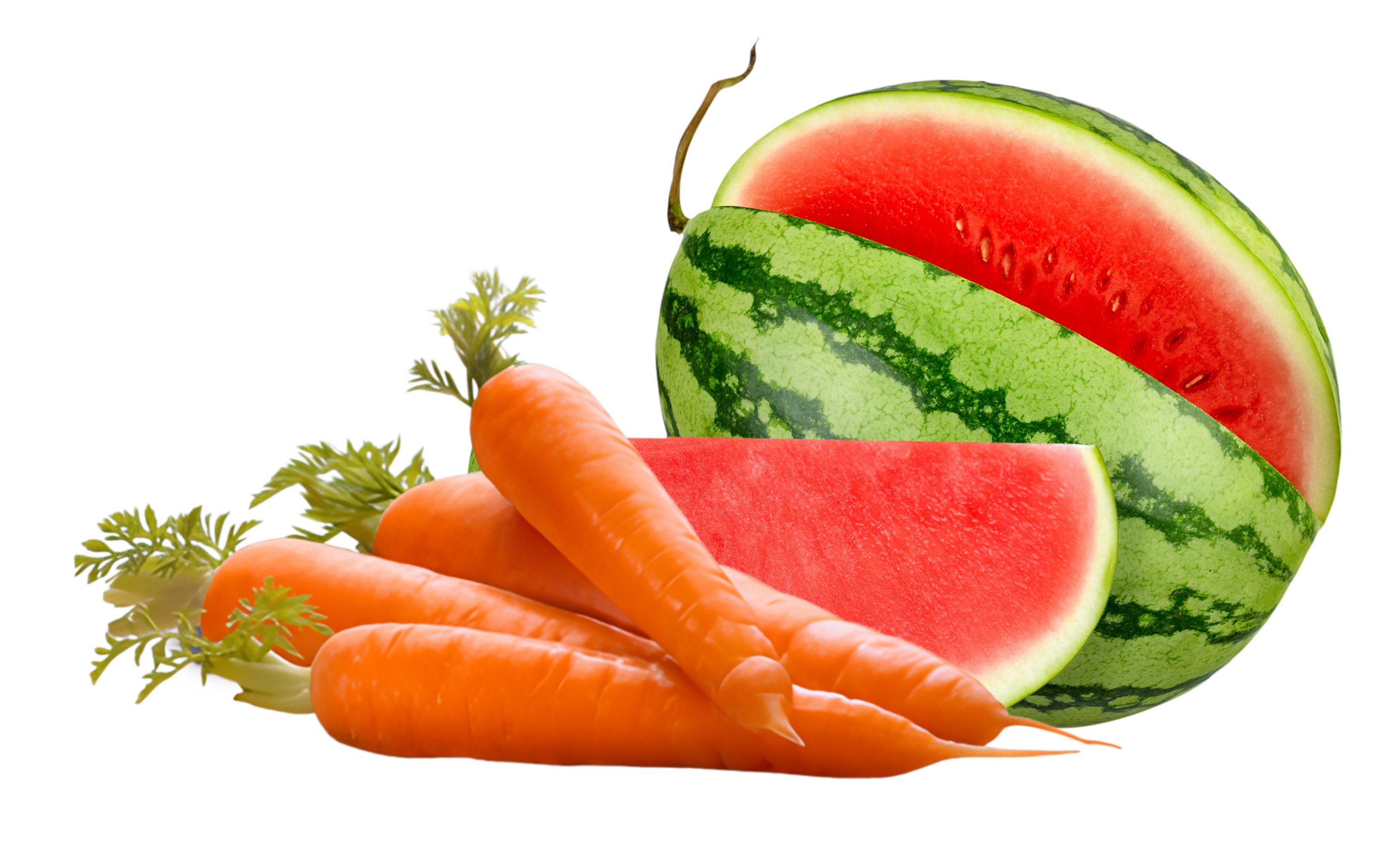
Examples are the many natural food that are sweet (high carb containing) yet health promoting, nutritiously dense, lovely fruits, like these poor chaps...
...... Watermelon and carrots
They have also been arrayed in High Glycemic Index, along with these high carb containing unhealthy nasty food like, sugary drinks, white bread, cookies, white rice and other refined foods.
Although watermelon and carrot do have high carbs contents, and so are included in the High Glycemic Index category, along with unhealthy high carb containing foods, they have a LOW Glycemic Load rating.
By the rule of sense and science, the natural high carb food like mango papaya, dates, grapes and all other sweet fruits which humans are adapted to metabolize for the millions of years cannot pose a health concern, if eaten in moderation and in accordance with the health condition, and the nutritional requirement of each individual.
So what? Should we neglect and dismiss the idea of Glycemic index?
Certainly not. Instead, while having the knowledge of Carb contents in a food, additionally we need to understand how much of that carbohydrate containing food we eat will end up in glucose, and how much it will affect the rise of glucose in our blood stream.
This idea has been explained by Harvard scientists in the term of Glycemic Load.
What Is the Glycemic Load (GL)?
To understand a food's complete effect on blood sugar, you need to know both how quickly it makes glucose enter the bloodstream and how much glucose per serving it can deliver.
Glycemic Load (GL) is a more accurate, practical tool than Glycemic Index (GI) for measuring how a specific, real-world serving of food impacts
blood sugar level.
While the GI gives us an idea about the total amount of carbohydrates in foods in their unconsumed state, GL is the measures of the actual impact of the carb-foods when eaten.
The amount of carb contents in the food explained in glycemic Index, and its actual impact on the blood glucose level greatly differ in accordance with kind and amount of carb containing food eaten. In another word GI explains the quantity of carbohydrate in the food while GL is a measure of the quality of the carb.
It accounts for both the speed of glucose conversion and the total amount of carbohydrates eaten.
GL categories
Low GL: 1 to 10
Medium GL: 11 to 19
High GL: 20 or more
GI vs. GL: While the Glycemic Index (GI) only measures how quickly a carbohydrate converts to sugar, the Glycemic Load (GL) takes portion size into account. For instance, watermelon has a high GI (80) but a low GL (5) because a standard serving contains little actual carbohydrate.
Impact on Blood Sugar:
- Low GL (1 to 10): Minimal impact on blood sugar.
- Medium GL (11–19): Moderate impact.
- High GL (=>20): Significant, rapid rise in blood sugar.
Health Impact:
A diet with a low overall GL is linked to better blood sugar management, improved A1C (Test for both diagnosing and managing type 2 diabetes and pre-diabetes),
and reduced risk of chronic diseases.
Examples:
White rice has a high GL (≈27), while a typical apple has a low GL (≈7).
How to Use GL
- Focus on Total Intake:
Aim for a total daily GL of under 100 for optimal health, suggests The Glycemic Index Foundation. - Combine Foods:
Pair high-GI foods with protein, fat, or fiber to lower the overall GL of a meal. - Portion Control:
Even low-GI foods can create a high GL if consumed in large quantities.
Comment
A high Glycemic Loads diet, mostly from fiber depleted unnatural food, will certainly cause obesity and will greatly increase the risk of developing type 2 diabetes mellitus (DM).
Insulin does mediate blood glucose entry into the cells for using it as energy, but insulin also signals the liver and muscle tissues to store the excess as fat in the body.
However, eating low GI and GL food alone will not be enough to get health benefits, as reported in the article published in JAMA on 17th December 2014.
Read the article here: Effects of High vs Low Glycemic Index of Dietary Carbohydrate on Cardiovascular Disease Risk Factors and Insulin Sensitivity
Maintaining a healthy glucose and insulin interaction condition (Glucose Homeostasis), knowledge of Glycemic Index, Glycemic load, and ‘calorie in and out' as a part of an Intelligent Eating foundation of an individually suitable Balanced Diet focused on overall health, while pursuing for Buddhi and understanding the factors which impact health, will be a correct strategy to avoid the avoidable diseases like obesity, CVD, cancer and others, and enable us to reap the health benefit from the messages of honest research studies.
Suggested site for more information:
Science Daily: Biology of Ageing "Insulin Plays Central Role in Aging." Brown University.